Il-Ħadd, Jannar 03, 2016

Football’s happy new year

In the world of sport since July we’ve had a rollercoaster of arrests, suspensions, extraditions and so many other events that should not even be mentioned in the same sentence with sport.


To say that 2015 was football’s annus horribilis is a huge understatement. In reality, for those of us who still manage to follow the game with a minimum of passion, it provided some relief. At least some of the wrongdoing at the top of its structures won’t go unpunished. Yet, trust in the way sport is governed is at an all time low, and that is not good news.

The New Year should bring some hope. It must.

Sepp, this way out please

Monday 21st December: “I am still the president. I regret, but I am not ashamed”.

Tuesday 29th December: “I now no longer fight for Fifa. They abandoned me. I am now only fighting for myself and my honour.”

These were the last two pearls of wisdom Sepp Blatter parted with. With his logic he should be the next candidate for sainthood. I’m sure he did give it some thought. It’s just a tad trickier with an Argentinian Pope. One could always conjure to find an acquaintance to take his place as a post-FIFA project.

The big day: 26th February 2016. As both Blatter and Platini battle it out in tribunals and courtrooms, the process to elect FIFA’s next president goes on. In all likelihood, end of February comes too soon for the two – particularly Platini – to manage some kind of resurrection. In my eyes the Frenchman turned out to be the biggest loser in the whole saga. He had planned a smooth transition to the FIFA presidency once Blatter retired. The latter stayed a term too many and Platini did not have the audacity to contest him this year. Now he arguably ended up, perhaps unjustly, as disgraced as his former mentor.

Since July we’ve had a rollercoaster of arrests, suspensions, extraditions and so many other events that should not even be mentioned in the same sentence with sport. You can’t really be blamed for raising your hopes too high in view of this election. The sad reality is that the inherent culture of governance in world football (as in most international sports federations) does not leave much space for idealistic optimism. The list of candidates vying for the post in question does little to disprove my point.

The five possible saviours 

One of the candidates’ claim to fame is having spent time in jail with Nelson Mandela. South African Tokyo Sexwale eventually made it big in the mining business and served on the South Africa 2010 World Cup Organising Committee.

Another, Jerome Champagne, served on FIFA’s Executive Committee for 11 years (although never implied in any scandals). He had failed to obtain the minimum number of five nominations to contest Blatter last May. His battle-cry is the need for better redistribution of the wealth football creates. Noble idea, one which the big boys (i.e. big countries and big leagues with big clubs) won’t like.

Europe’s candidate, current UEFA General Secretary Gianni Infantino, was the latest addition to the lot. He’s known as a good administrator but he never occupied the front seat. Besides, he is in the list as Platini’s alter ego.

We come to the favourites. Prince Ali bin Al Hussein of Jordan took on Blatter earlier this year, garnering 73 of the 209 votes. The Malta FA was one of the associations nominating him then, and it is doing so again now. Quite admirable when considering that the MFA shunned Platini and later Infantino to stick to its guns. The Prince is basing his campaign on the need for reform to tackle corruption in the running of the organisation. The fact that he cannot bank on most of his Asian counterparts could be crucially detrimental.

That’s because Asian associations tend to rally behind their current Confederation President, Sheikh Salman bin Ebrahim Al Khalifa of Bahrain. A former backer of Platini, Al Khalifa’s main theme is decentralisation of power within FIFA. As a member of the Bahrain royal family he has been accused by human right groups of being involved in the suppression of demonstrations in 2011. Such little matter aside, as things stand he seems to be the front runner. But eight weeks until 26 February is a very long time.

On the pitch 

Thankfully the show goes on. The key football event of the New Year ought to be Euro 2016 taking place in France. The tournament will include 24 teams, including newbies such as Albania, Northern Ireland, Wales and Iceland. Holders Spain may not be the same bunch by now, and meanwhile Germany have become World Champions.

We’ll have more time to savour the excitement such tournaments bring with them. At this point in time, reeling as we are from the shock of the Paris attacks in November, it is impossible not to link the two. It is inevitable that fans will have security concerns at the back of their minds.

Closer to home, 2016 will also see the start of the 2018 World Cup qualifying campaign. A number of exciting fixtures await our national team. The opener is at home against Scotland on the 4th September, followed by the away encounter against England a month later.

Football is one of the constants in life. Enjoy it while you can. Happy 2016.            

Il-Ġimgħa, Ottubru 23, 2015

Skating on thin ice


While the global media relishes episode after episode of the FIFA saga, another - quieter - revolution could be taking place that could spell the end of sport governance as we know it. The names involved are arguably less glamorous (or notorious) than the Blatters, Platinis, or even Beckenbauers of this world


When Dutch speed skaters Mark Tuitert and Niels Kerstholt took part in an independent off-season event last year, they knew they were challenging the status quo in most organisations within the pyramid of sport governance. In several disciplines, professional athletes are barred from participating in competitions other than those organised or recognised by the association or federation they belong to.


Let's take football for ease of reference. Players cannot participate in competitions other than their domestic league or UEFA and FIFA competitions at club and national team level. When the top European clubs flouted the idea of setting up a league of their own outside UEFA - because they have enough demand and economic firepower to do so - they were 1) threatened with eternal suspensions, and 2) accommodated enough to stay put as UEFA bent over backwards to appease them.


Tuitert and Kerstholt were similarly threatened of being suspended from the International Skating Union (ISU) and consequently being unable to compete in major competitions such as the Olympics and the World Championships. Only that in their case the threat was carried out. 


For the record, Tuitert is the Olympic Champion in the 1500 meters and Kerstholt was World Champion in short track with the Dutch national team. Not that it matters much. Their claim would have been the same if they always placed last: here is an organisation, the ISU, that is abusing of its monopoly in regulating the sport, they maintain.


The two skaters complained to the Euorpean Commission. As they said in an open letter, "the numbers speak for themselves: an individual short track speed skater winning all the ISU competitions in a typical season would earn around €25,000. This is less than what the same skater would receive for merely appearing in a single, two-day Icederby event".


The European Commission is indeed investigating the complaint “because it raises specific allegations of breaches of competition law at the international level rather than wider issues of internal governance or rule-making in a sport federation". Back in June, as soon as a third of the FIFA Executive Committee was arrested in Zurich, the European Parliament has expressed the same concerns. 


When sport becomes an economic activity, it has to balance out its traditional autonomy and specificity on one hand, and compliance with market and employment rules on the other. Athletes can only compete at the highest level for a limited number of years, so there must be good reasons for preventing them to take part in events.


This case could well fizzle out if the European Commission deems there were good reasons behind the ISU position. It could be, however, that if the Dutch skaters' claims are considered justified, international sport governance would need to be redefined. International federations such as FIFA  would be restricted to governing the rules of the game, leaving the organisation of competitions (and the mountains of revenues) to others.


If that happens, you heard it here first.


Il-Ġimgħa, Mejju 29, 2015

Football is the game, FIFA is the shame

Don’t you just love America for going after FIFA? Even if only for that.

Take the press conference given by the Department of Justice. Whereas I would usually cringe at the way they make a spectacle of what should be a bland presser announcing an indictment, this time I enjoyed every minute of it. To think that they actually prefer baseball.

Americans just have a knack for it. “The World Cup of fraud” – that is how the Head of the Investigation Division termed it. There, you have the headlines ready to go to print. 

Here they were trying to explain in the best of terms the picture that ensued following years of investigation. The people at FIFA, tasked with upholding the rules to protect and promote the game, have instead corrupted it to serve their interests, turning football (ok, Americans keep saying ‘soccer’, but we can turn a blind eye to that, just this time) into “a criminal enterprise”, as the US Attorney General described it. 

Earlier, as people in the US were still fast asleep, a solitary FIFA Director of Communications gave his own press conference. Conspicuously alone, sitting at a grand podium that usually accommodates a gang of self-important, vain officials, I almost felt a degree of empathy for him. Almost.

He had none of the flowery language that would be used across the ocean. His were mostly one-word answers. The ‘line-to-take’ was that FIFA is actually the damaged party in all this. He must have repeated it half a dozen times, almost as many times as the instances he stressed that Sepp Blatter is not involved in the investigation.

Good old Sepp has been working at FIFA since 1975, first as technical director, then general secretary 
 for seven years, until being elected president in 1998. Today he is vying for his fifth four-year term. That would take him to the grand total of more than four decades, half of which he spent actually heading the organisation.


But he’s “not involved”. Even though a host of his current and former Vice-Presidents and Executive Committee members are currently under investigation. Accountable? What’s that?

Few would have thought the 65th FIFA Congress would turn out to be this exciting. We all predicted another circus that would smoothly re-elect Blatter. Not that he is going to budge. His lame speech in the only public appearance he made in the past two days proves it. Welcoming the delegates to the Congress he refused – once more – to take the blame. “I cannot monitor everyone all of the time”, he 

told us. He did acknowledge, however, that “more bad news may follow”.

The buck must stop with Blatter. Something tells me it soon will.

His only way out is to stay in. Yet, even if today he scrapes another election victory, staying in might not be enough this time round.


Whether his replacement is the antidote for the game is another matter (on its own, it is definitely not), but until then we’ll continue to savour the moment.


It-Tlieta, Novembru 18, 2014

Għall-ġid tad-diskussjoni

Id-diskussjoni fuq il-bidliet f'ċertu aspetti tat-tmexxija tal-futbol Malti qanqlet reazzjoni qawwija, għallinqas jekk niġġudika mill-kummenti fuq Facebook.

Dan id-dibattitu qed insibu vera interessanti. Fl-aħħar qed niddiskutu 'l fejn irridu mmorru. Ma naqblux, ma jimpurtax, imma essenzjali li jinqsmu l-ideat. 

Dan hu tentattiv biex id-diskussjoni tkun ftit aktar infurmata. Se nipprova nkun oġġettiv kemm jista' jkun u nżomm mal-fatti. Mhux faċli tillimita ruħek li ma toffrix il-veduti tiegħek, imma se nipprova (u mhux se jirnexxieli).

1. Ir-riforma mhix biss fuq in-numru ta' barranin fil-Premier (jew fid-diviżjonijiet l-oħra). 

Il-proposta li jkun hemm 8 barranin fil-Premier ġejja mill-kumitat li jirrappreżenta l-klabbs tal-Premier. Din trid tiġi approvata mill-Kunsill tal-MFA (jiġifieri l-klabbs kollha u member associations bhal dawk li jirrapprezentaw lill-coaches, amateur leagues, referees, youth football, football f'Ghawdex, ecc.).

2. Ħafna mill-kritika li nara kontra l-MFA nsibha kemxejn sgwidata. Ħa nispjega.

L-MFA għandha President u Viċi Presidenti eletti (iva, mill-klabbs u l-member associations). Għandha wkoll segretarjat immexxi mis-Segretarju Ġenerali. Dawn flimkien jagħtu direzzjoni, bħal fil-każ tar-riforma kollha li qed niddiskutu.

Id-deċiżjoni aħħarija hija tal-Kunsill jew tal-Laqgħa Ġenerali. Jingħad spiss li peress li l-Kunsill u l-Laqgħa Ġenerali huma magħmulin minn rappreżentanti tal-klabbs, mela allura huma dawn li jiddeċiedu kollox.

Minnu. Hemm raġuni għal dan. Idealment, il-forum li jiddeċiedi jkun jinkludi fih l-istakeholders kollha tal-logħba, imma mhux bilfors kulħadd rappreżentat indaqs. Jekk dan hux tajjeb jew ħażin nistgħu niddiskutuh fit-tul ukoll, imma l-ħsieb tiegħi hawn hu biss li nagħti stampa tal-affarijiet kif inhuma.

3. Inutli nħambqu li fl-aħħar mill-aħħar tort tal-klabbs ("għax huma jiddeċiedu"). Mhux billi naspiraw li l-players isiru professjonali, jekk il-klabbs stess li jimpjegawhom m'humiex. Għall-kuntrarju l-klabbs huma x'aktarx l-aktar ħolqa dgħajfa fil-katina - mhux daqstant għax m'hemmx nies validi jmexxuhom, imma proprju għax huma mmexxija fuq bażi volontarja. 

Dan irridu nżommuh f'moħħna meta per eżempju nitkellmu fuq amministraturi full-time (jew part-time) fil-klabbs. Min se jħallashom? L-unika triq li nara hija li jkun hemm pooling tar-riżorsi - u l-unika pool huwa l-MFA. Imma forsi hemm ukoll soluzzjonijiet oħra int he long term. 

Veru li mhux sew li xi players jispiċċaw imxekkla milli jiċċaqalqu minħabba l-flejjes li kultant jintalbu għalihom. Veru li jekk klabb irid iżomm il-plejers tajbin tiegħu għandu joffrilhom kuntratt u mhux iżommhom miegħu minħabba xi dritt divin li jkollu. Imma xi ħadd irid jistaqsi: minn fejn ġejjin il-flus? Liema klabb Malti jiġġenera l-flus b'mod li jiffinanzja l-operat tiegħu b'mod sostenibbli? Sponsor jiġi u jmur. President ġeneruż jiddejjaq u jitlaq. L-ebda klabb f'Malta ma jiġġenera biżżejjed, sempliċiment għax kważi impossibbli - ħadd ma jista' jibdel l-economies of scale tagħna.

Jekk m'hemmx minn fejn, inutli nittamaw li l-player jilgħab fuq bażi professjonali. X'aktarx qed nippruvaw nirregolaw livell li lanqas biss ilħaqnih. Bir-regolamenti biss ma nsirux professjonali (inneħħux il-parametri, is-salary capping, eċċ, eċċ.).

Tant biex nagħrfu nkunu ftit aktar realistiċi.

Il-Ħamis, Ottubru 16, 2014

The aftermath of a (de)feat


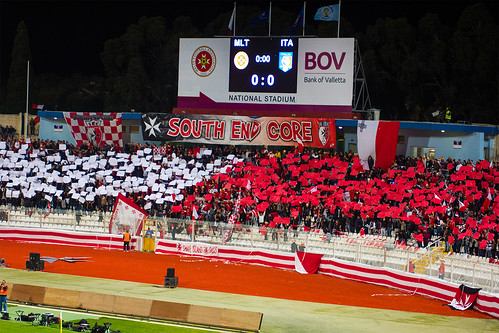
There are very few occasions when our athletes compete against the very best. Football is arguably one of the few disciplines in which we get the opportunity to face world class opponents from time to time. The last two home matches against Norway and Italy were a case in point, which inevitably awakened the hidden coaching qualities in all of us.

Waking up to the day-after comments of hundreds of closet-Mourinhos would have been exasperating enough. Some were happy with the result, others simply called for the manager’s head. But quite a few tended to outdo themselves with all sorts of strategic advice to players, coaches, administrators, politicians, and the lot. I wouldn’t be surprised if even the national team mascot got the blame for our lack of good results.

These are some of the suggestions we all came across in some form in the past week: more professionalism; the need to have players play abroad; better development of youth players; more investment; better club set-up; etc, etc.

So here I am, pitching in with my proverbial tuppence worth.


In any sphere of activity, making it to the top is hard. Very hard. Football is no exception. It is clear that, as in other areas, investment is crucial. Yet, do we ever ask ourselves: where does (or should) the money come from? The demand side of football is dwindling, and even if it weren't, our economies of scale are what they are. That is where so many actors involved in the game find endless stumbling blocks, despite being well-intentioned, well-prepared, and determined to research and implement fresh ideas, models, and methodologies.

Of course we'd like to have serious planning and development policies in our clubs! But there are very very few clubs that have constant and reliable revenue streams allowing for a decent non-amateur set-up.

This is not a rant about our limitations. In fact, I hate self-pity as much as I hate the complete lack of a sense of perspective.

Is it that difficult to accept that losing 1-0 to Italy or 0-2 in Croatia is a feat in itself when you consider the real gap between the respective levels? Would it be the end of the world if we acknowledged that losing 0-3 to Norway was simply a fair reflection of the quality of the teams on the pitch? This despite, or thanks to, the diligent and generous performance by the lads on most occasions.
  
Does this mean that I would be happy if we kept losing ad aeternum against any opposition? Of course not!  At the same time, I think close results like the one obtained/suffered against Italy (depending on the category of Mourinhos you belong to) tend to skew our judgment as they invariably lead to the illusion that we can compete at par with anybody every time.

I do think there are huge margins of improvement. If there is one thing we can learn from the much-vaunted success stories of the likes of Iceland (yes, they beat Holland) and Belgium (yes, they made it to the World Cup Quarter-Finals), it is the need for integrated planning. It does not mean that we’ll beat Holland or that we’ll make it to the World Cup. But it could mean that we maximise our potential better – whatever that potential is.

Laudable efforts have been made throughout the years, but these were mostly isolated in separate silos: technical, administrative, infrastructural; each aspect is developed without much interaction with the others. It is easy to point fingers at only one of these branches: some blame our lack of good results on the level of our coaching, others on the dismal administration of some of our clubs, or on the players, or the MFA, or the government, and on and on we go. 

Truth is that all these aspects need to grow together. Government and sports associations, for instance, cooperate only on one-off infrastructural projects or initiatives. Rarely, if ever, do they get together to implement long-term policy. It is easier said than done, but it can be done - as it has been elsewhere. 

Photo: Mark Cassar Photography

The MFA has so far been the only actor that has been able to invest in the various aspects of the game. It has the facilities and it has the required revenues(an ancillary benefit of the overall economies of scale that football enjoys at European and international level). Yet, pointing fingers exclusively at the MFA is rather restrictive. It is true that the association is to be at the forefront of any strategy aimed at improving the level of our game, but it also needs the cooperation of all the stakeholders involved. There are, after all, improvements that can be made by others at minimal costs – I’m thinking nurseries, clubs, but also parents and educators.

Integrating football in schools, for example, is something that we never really managed to achieve in a structured way. This applies equally to other sports. Before anybody gets too excited, it needs not necessarily take up school hours. And it need not even be a burden on the state. Rather, it could be a way to fuse the efforts of nurseries within our schools.

Our resources and manpower (which is increasingly harder to come by) are too fragmented to afford to leave stones unturned in seeking ways to improve. If we can only manage a handful of players that make the cut to play abroad, how many decent coaches can we produce? How many ‘fit and proper’ administrators are able to manage our clubs? Ironically, the less resources we have, the more stretched out our efforts are: 53 clubs in the MFA leagues, each with its own nursery. Countless others in other amateur leagues.

How many times do stakeholders sit together to discuss things holistically: coaches, administrators, public servants, academics, players, parents? Do we ever, at all? I'm not referring to some grand conference once every blue moon, but to direct, constant consultation with all involved. Around the same table. That is what I call an integrated approach. Each of them has a role. Administrators cannot take on the pitch themselves – only players can; players are not expected to worry about where their salary is coming from – administrators should; club officials should care more about development and less exclusively about winning cups; the same goes for parents.

It is not easy to assess or measure improvement and success. Our objective should be to move as close as possible towards the conviction that we are really doing our best. With our limitations, but to the best of our possibilities.

We would not even need a Mourinho in that case.